
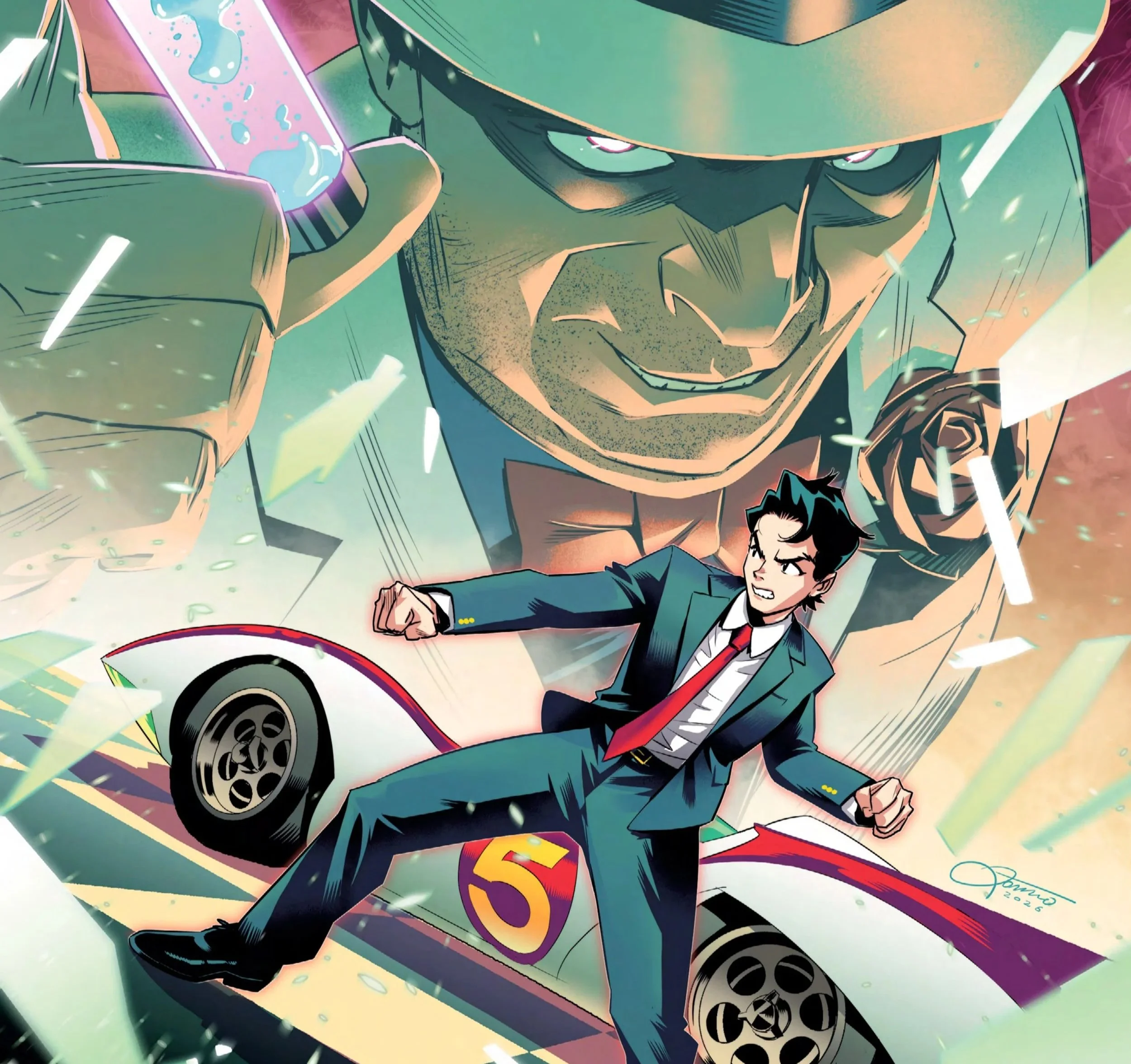
Writer: David Pepose
Artist: Davide Tinto
Colorist: Jão Canola
Cover Artist: Alessio Zonno
Speed Racer #8 is the kind of issue that shows exactly why this series works as well as it does. On paper, this chapter sounds ridiculous. A fancy gala, a mad scientist unveiling miracle fuel, a giant red monster truck bursting through a wall, gangster theatrics, missiles, grappling hooks, and a romantic climax between Speed and Trixie all collide in one issue. In almost any other book, that mixture could feel like too much.
Here, it just feels like Speed Racer.
That may be the biggest compliment I can give David Pepose and the rest of the creative team. They’ve built a world so committed to its own cartoonish reality that none of this feels out of place. The story is big, bright, dramatic, and completely sincere. It knows exactly what kind of book it is, and by this point, I’m fully bought in.
Feelings at Full Speed
The issue opens at the Ocean Industries Gala, immediately placing Speed in a world where he doesn’t feel comfortable. That’s a smart starting point because it gives the story a quieter emotional foundation before all the chaos begins. Speed Racer may be fearless behind the wheel, but outside of the track, he’s still unsure of himself in ways that make him feel more human.
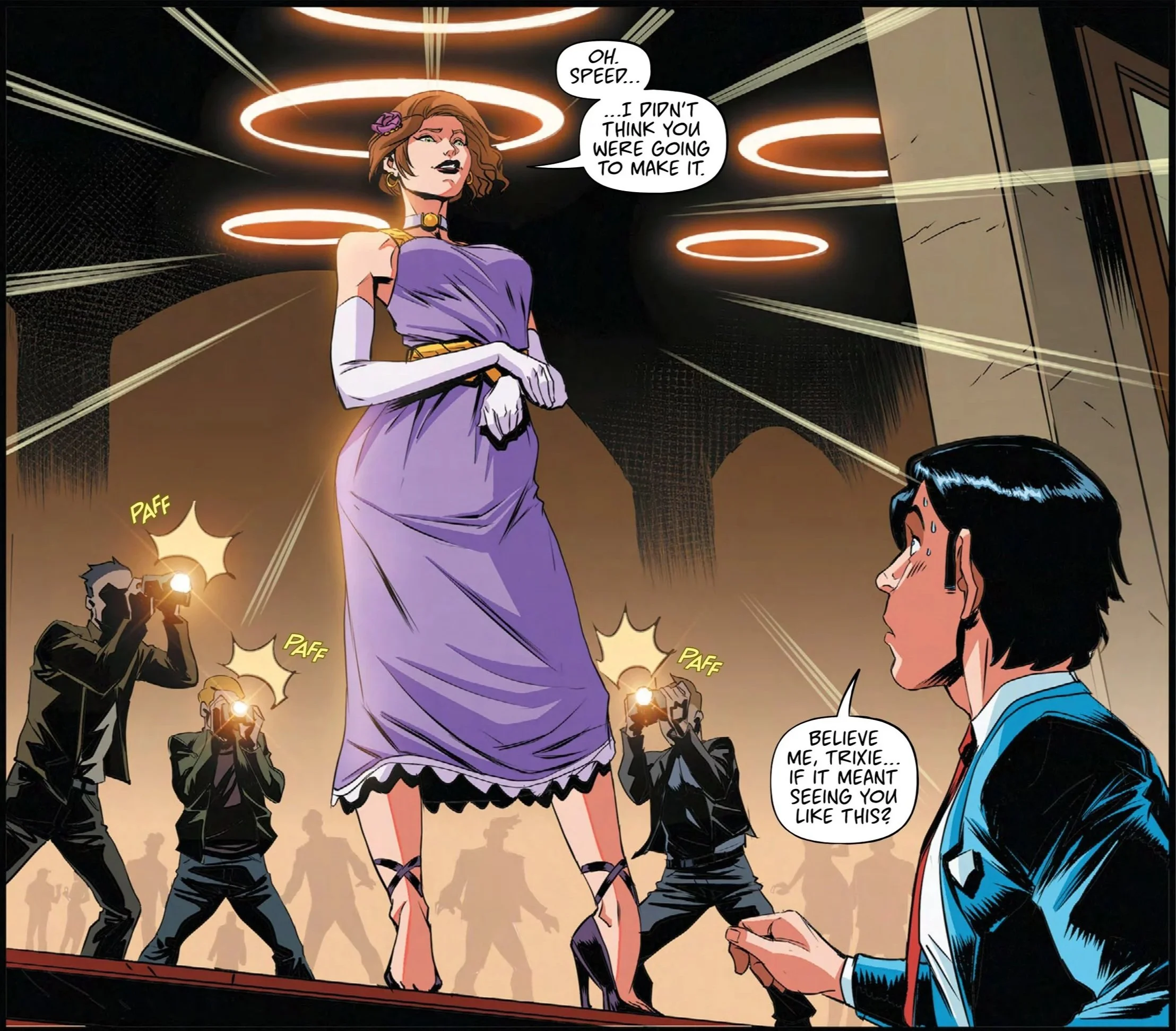
Then Trixie appears, and the issue makes it very clear how Speed sees her. The halo effect around her entrance is wonderfully cheesy in the best possible way. It’s not subtle, but subtlety has never been the point of this series. The moment works because it fully commits to the emotion Speed is feeling.
That’s what makes the romance between Speed and Trixie so effective here. It’s not buried beneath irony or treated like something the book is embarrassed by. Their conversation about the kiss from the Great Alpine Race feels genuinely important, not just as romantic drama but as character work. Speed admits he hasn’t stopped thinking about it, while Trixie pushes back because of their professional relationship and her fear that Speed will eventually leave her behind.
That fear makes sense. Trixie isn’t just hesitant because the plot needs romantic tension. She understands who Speed is. He’s a racer, and racing is built on movement, risk, and chasing the next finish line. Her worry that he’ll leave her in the rearview mirror fits perfectly into the world of the book while still feeling emotionally honest.
The Puns Still Work
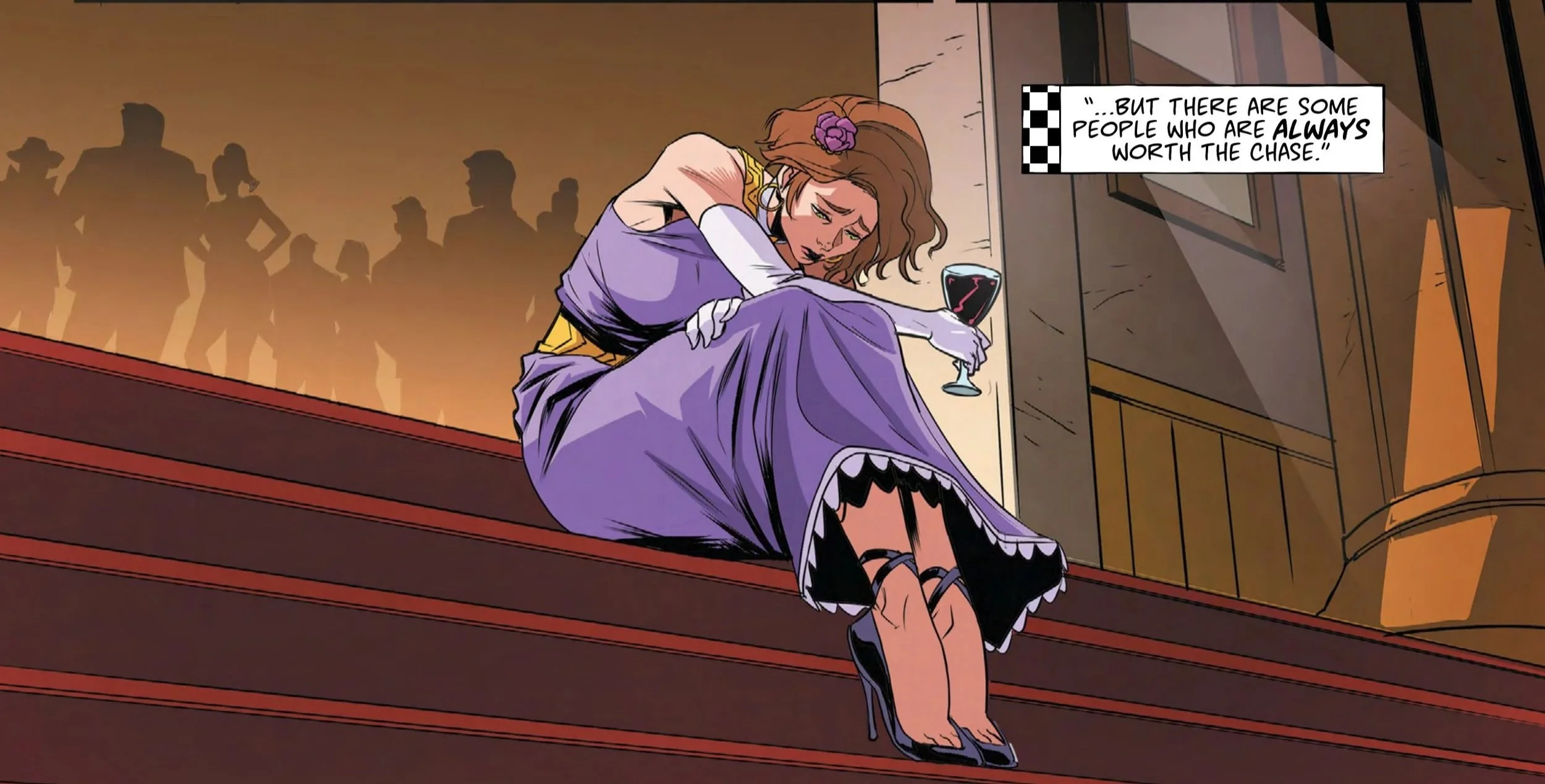
One of my favorite things about this series is how fully it embraces car-related dialogue without making it feel forced. This issue is packed with that kind of language, especially because the emotional focus is on Speed and Trixie’s relationship. Lines like Speed saying, “There are some people who are always worth the chase,” should probably sound goofy.
Instead, it works.
That’s because the series has trained the reader to accept this heightened reality. The characters speak in a way that matches the world they live in. It’s dramatic, sincere, and occasionally ridiculous, but it’s consistent. The book isn’t winking at the reader every five seconds or apologizing for being cheesy. It just goes for it.
That sincerity is what makes the dialogue land. These lines would probably fall apart in a more grounded comic, but in Speed Racer, they feel right at home. The series understands that charm is part of the franchise’s DNA. It doesn’t run away from that. It leans into it.
Fantasty and the Great Mammoth Car
The gala sequence quickly shifts from romance to full-on spectacle with the introduction of Doctor Frederick Fantasty, which is exactly the kind of scientist name this book should have. His presentation of Fantastium-217 continues the series’ love of over-the-top science, giving the issue a clean bridge between emotional drama and cartoon action.
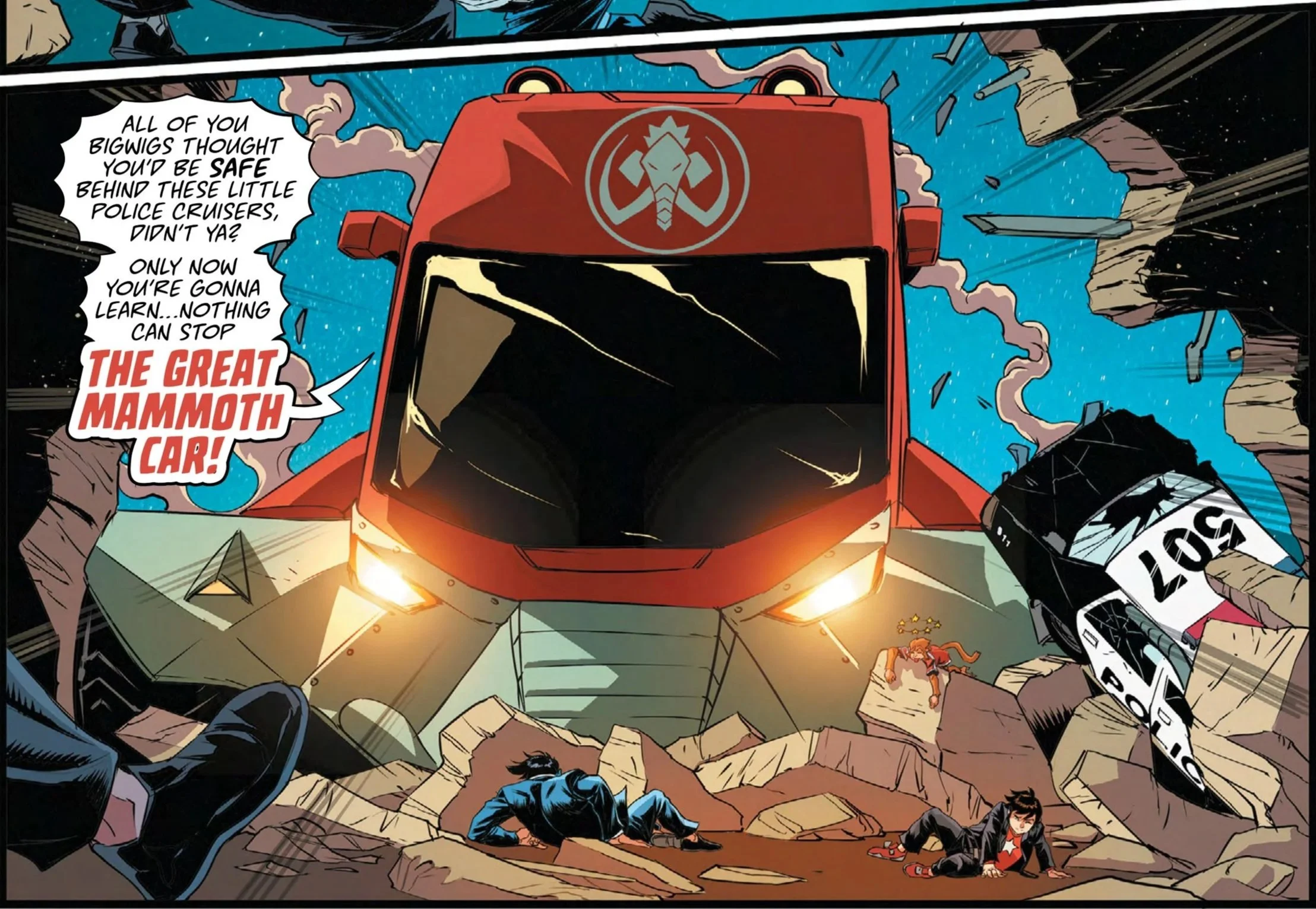
The fuel itself is shown to be incredibly powerful, and the demonstration does exactly what it needs to do. It establishes the stakes clearly, sets up the danger, and gives the villains something worth stealing. By the time the Great Mammoth Car crashes through the wall, the issue has already prepared us for why this matters.
The Mammoth Car is a fantastic addition. Its design is aggressive, oversized, and instantly memorable. It feels like something that belongs in the same universe as the Mach 5, but as its complete opposite. Where the Mach 5 is sleek, stylish, and heroic, the Mammoth Car is oppressive and brutal. It doesn’t glide through the world—it smashes through it.
Cruncher Block makes a strong impression as well. He fits perfectly into the series’ larger-than-life villain mold, and while he’s not the most complex antagonist the book has introduced, he doesn’t need to be. His purpose is clear. He brings danger, escalation, and the kind of cartoon gangster energy that makes the issue feel even bigger.
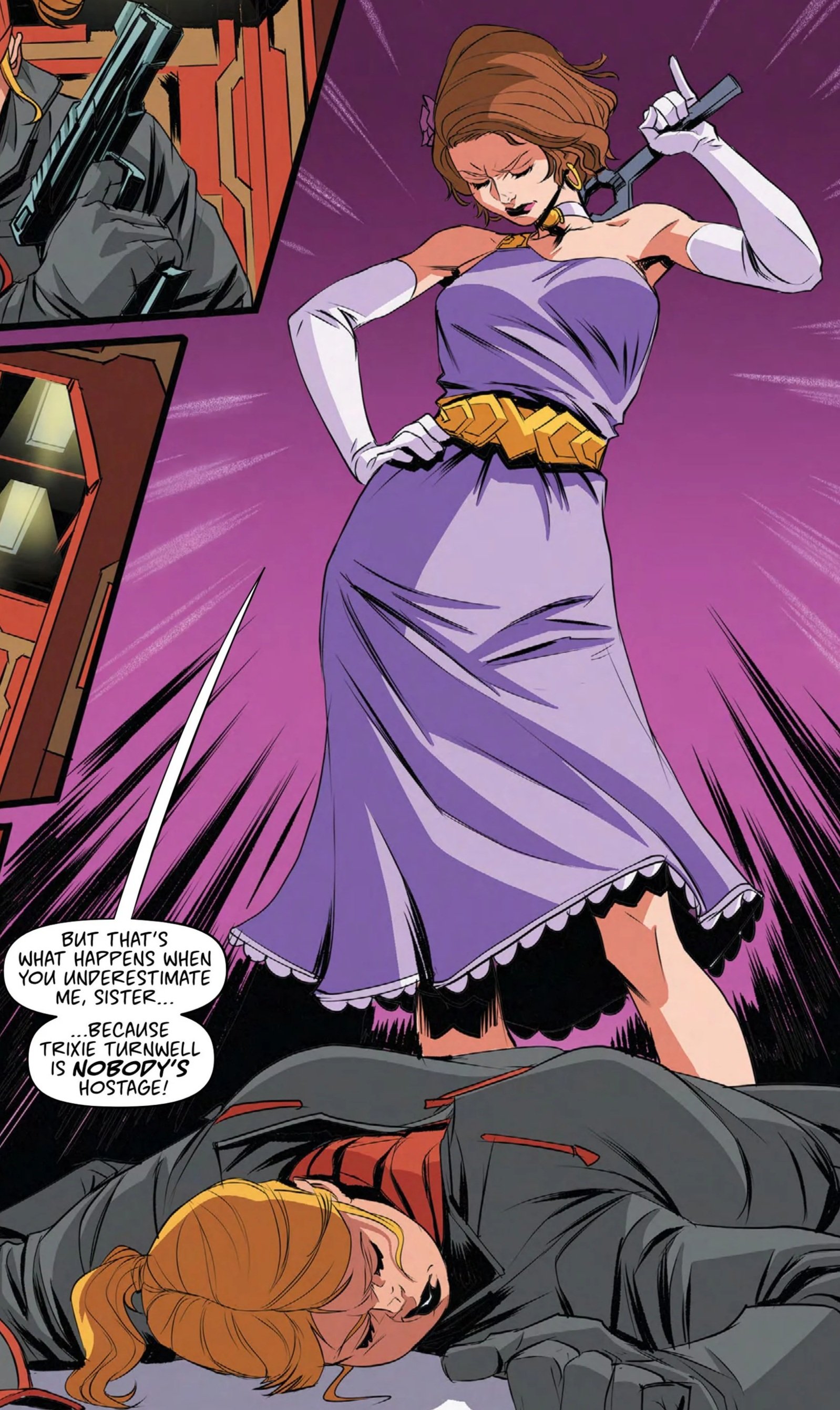
Trixie Turnwell Is Nobody's Hostage
The decision to have Cruncher take Trixie hostage could have easily reduced her to a simple damsel in distress, but the issue avoids that trap. Trixie may be captured, but she’s never passive.
Her confidence throughout the sequence is one of the issue’s strongest elements. She warns Cruncher that he’s making a mistake, and she’s clearly aware of how Speed and Racer X operate. When the homing drone explains how they found the Mammoth Car so quickly, it’s a small but smart detail that keeps the action from feeling too convenient.
More importantly, Trixie gets to take action herself. Her wrench attack is a perfect example of this series’ tone. “Trixie Turnwell is nobody’s hostage” is the kind of line that could be painfully corny in the wrong book, but here it absolutely works. It’s big, fun, and totally in character.
That moment also reinforces why Trixie and Speed work as a pair. She isn’t just someone he has to rescue. She’s someone who can hold her own inside the same absurd, high-speed world he lives in. That makes their romantic resolution feel more earned by the end of the issue.
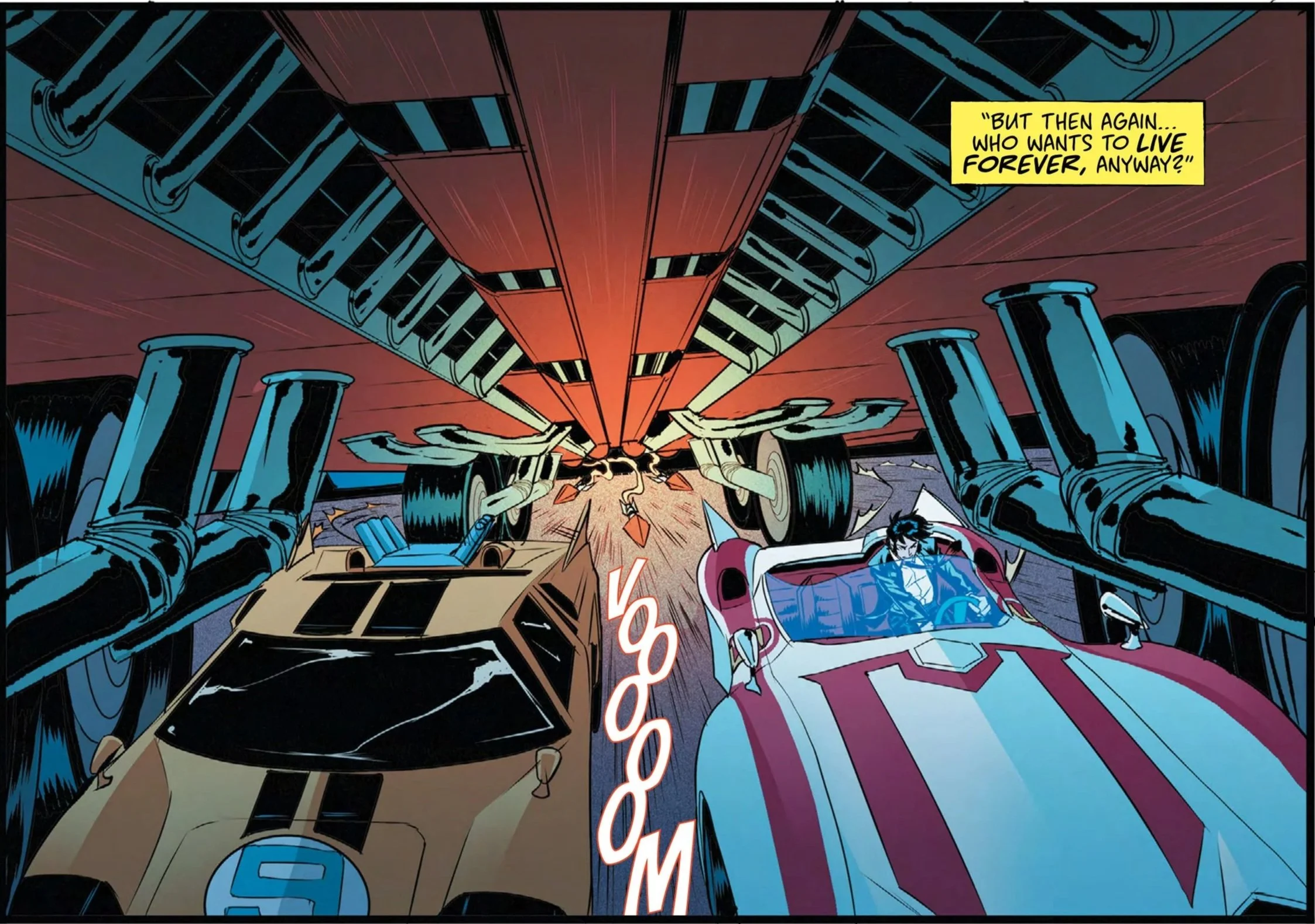
Speed and Racer X in Motion
The action sequence between Speed, Racer X, and the Great Mammoth Car is one of the most enjoyable stretches of the issue. It has everything this book does well: fast pacing, ridiculous vehicle combat, smart maneuvers, and just enough tactical thinking to keep the chaos readable.
Racer X trying to stop Speed from chasing Cruncher adds a nice layer to their dynamic. He knows the danger, but he also knows Speed well enough to understand that he isn’t going to back down. Once they’re both in pursuit, the issue becomes a high-energy chase that never loses track of the characters involved.
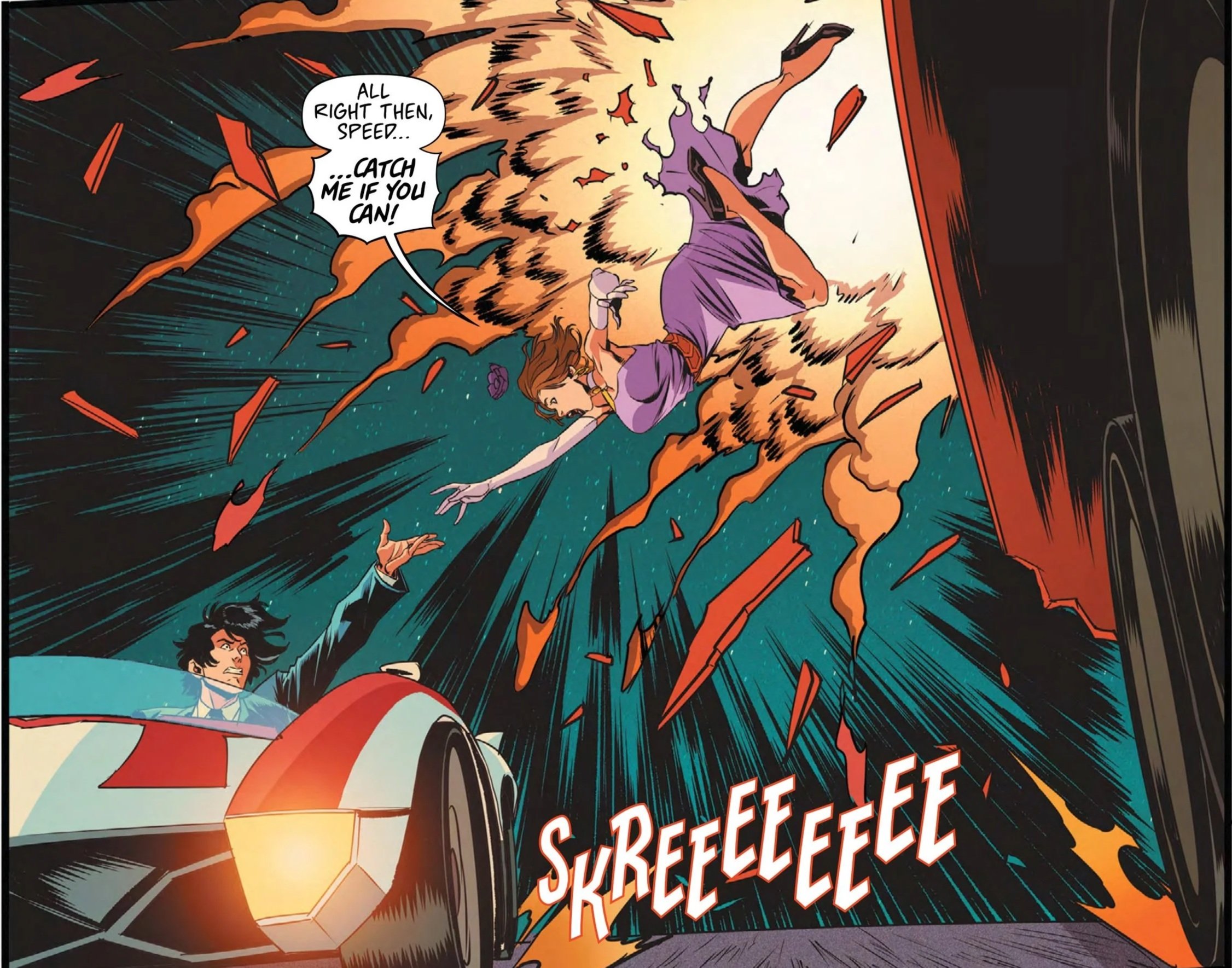
The missile sequence is especially fun. Racer X veering into the woods and using his driving skill to force one missile into another is exactly the kind of action beat that makes this series so entertaining. It’s exaggerated, but it’s rooted in skill rather than pure luck. The same is true when Speed and Racer X guide the missiles under the Mammoth Car, causing the explosion that forces Cruncher to drop the fuel sample.
The issue understands that Speed Racer action works best when it’s not just about going fast. It’s about clever driving, quick thinking, and using the impossible logic of this universe in ways that still feel satisfying.
Cartoon Logic Done Right
What impresses me most about Speed Racer #8 is how comfortably it exists in its own reality. This issue has a lot going on, and almost all of it is heightened. The science is absurd, the villain is exaggerated, the romance is sincere, and the action is completely over the top.
Yet none of it feels random.
That’s because the creative team has created a consistent tone across the series. The world has rules, even if those rules are cartoonish. The Mach 5 can do wild things, villains can drive monstrous vehicles through walls, and scientists can create miracle fuels with explosive consequences. But because the book commits to that logic so fully, the reader never feels like the story is cheating.
This issue may be one of the clearest examples of that strength. It balances romance, action, humor, and danger without making any one element feel like it belongs in a different book. That kind of tonal control is harder than it looks, especially in a series this openly fun.
Art That Matches the Energy
The art continues to be a major part of why this book works. The gala scenes have the right sense of polish and glamour, especially Trixie’s entrance, which sells Speed’s reaction without needing to overexplain it. The visual exaggeration fits the emotion of the scene perfectly.
Once the Mammoth Car arrives, the issue shifts gears visually in a big way. The vehicle looks massive and dangerous, and its entrance through the wall gives the story the exact jolt of energy it needs. The action that follows is clear, fast, and exciting, with the vehicle combat remaining easy to follow even as things become more chaotic.
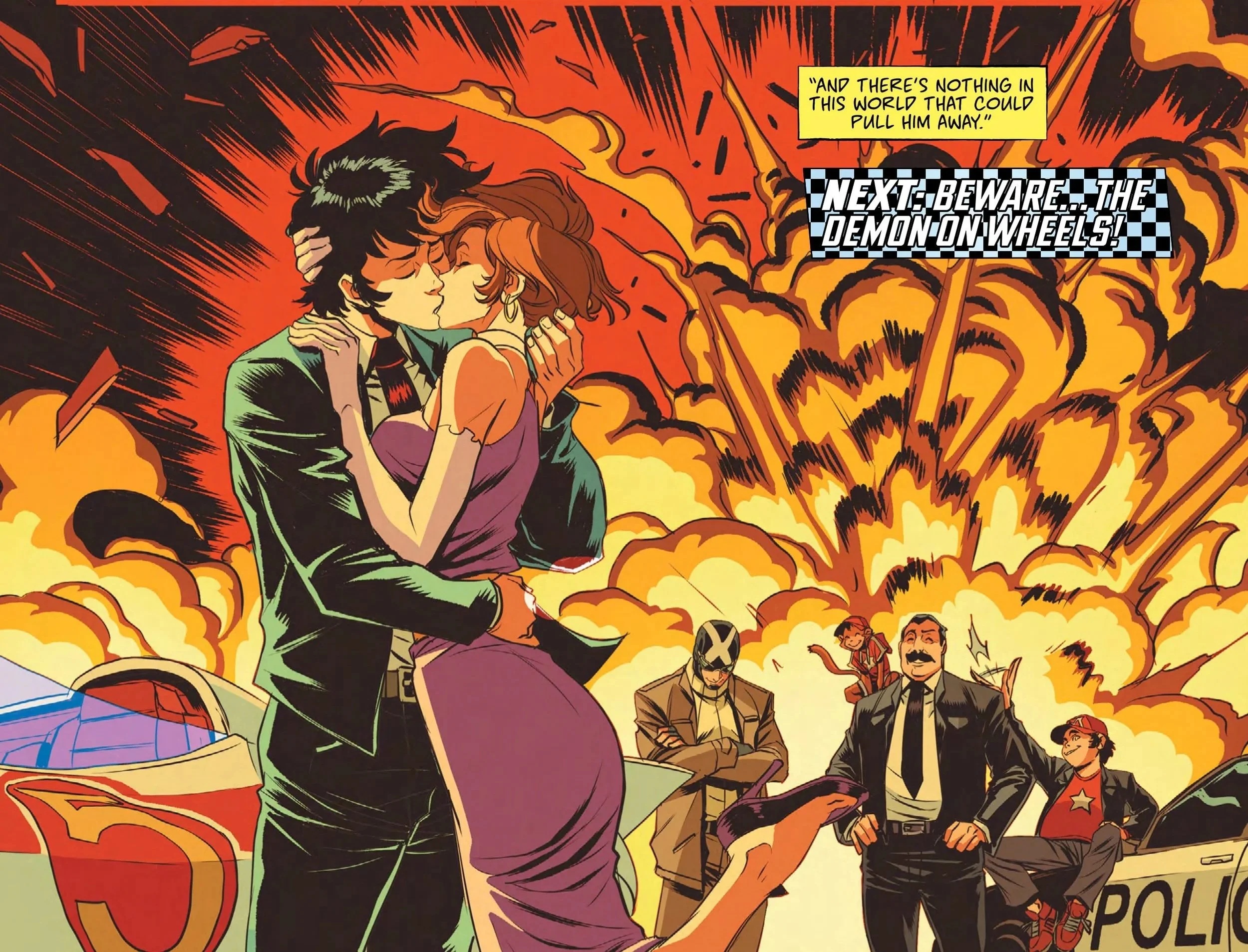
The explosion involving the Fantastium-217 is another standout visual moment. Because the danger of the fuel is established earlier, the blast feels like a natural payoff rather than just another big action beat. It gives the ending of the chase a real sense of scale.
The art also handles the quieter romantic moments well. Speed and Trixie’s final embrace could have easily felt too sentimental, but the visuals sell it with sincerity. That matters because this issue is not just about stopping Cruncher Block. It’s about Speed and Trixie finally accepting what’s been building between them.
Final Thoughts and Rating
Speed Racer #8 is a great issue and one of the strongest chapters of the series so far. It delivers almost everything I want from this book: high-speed action, emotional sincerity, ridiculous science, cheesy but effective dialogue, and a villainous vehicle that feels instantly memorable.
The romance between Speed and Trixie gives the issue its heart, while the Great Mammoth Car gives it its spectacle. Cruncher Block makes a strong debut, and I wouldn’t be surprised if we haven’t seen the last of him. If he does come back, I imagine he’ll be a lot worse for wear after that explosion.
What makes the issue work so well is how completely it understands the appeal of this universe. It’s cartoonish, but not shallow. It’s cheesy, but not lazy. It’s over the top, but never careless. Pepose and the rest of the team have made this reality feel fully believable on its own terms, and that’s not an easy thing to pull off.
If you’re already reading Speed Racer, this issue is a reminder of why the series has been so much fun. If you’re not reading it yet, this is the kind of chapter that makes the case for jumping in. And if you already are reading it, honestly, read it again.
Rating: 9/10
A wildly entertaining issue that blends romance, cartoon chaos, and high-speed spectacle into one of the most confident chapters of the series so far.